
It’s about writing that forgot to sound like someone.
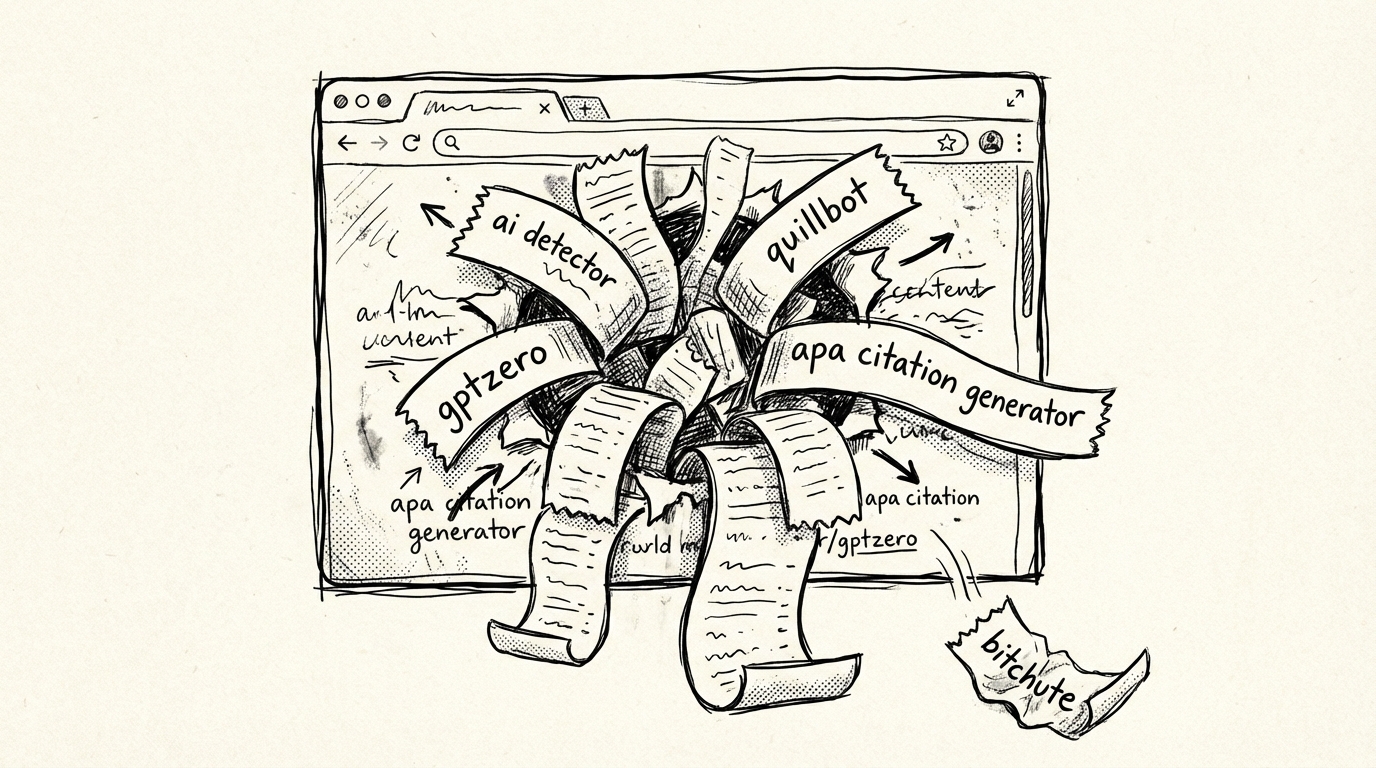
The night before a submission, my browser looks like a junk drawer:
ai detector, ai checker, gptzero, quillbot, a paraphrase tool, “humanize ai,” easybib, citation machine, an apa citation generator, an mla citation generator, a generic citation generator—plus a tab labeled “caht,” a stray Zenni ad, and a rabbit hole to Bitchute I definitely didn’t mean to click.
It feels productive.
It’s mostly avoidance with good branding.
Here’s the uncomfortable truth: detectors don’t punish AI—they punish generic writing.
When claims float, details blur, and the prose could belong to anyone, an ai checker will flag it and GPTZero will make you nervous. Not because you cheated—but because your work lacks fingerprints.
What actually fixes it
Before touching QuillBot or any paraphrase tool, I outline three things in plain language:
the claim
the evidence
the limitation
One paragraph per idea. One verb that moves. One source I can point to by page or figure.
Only then do tools come out. QuillBot becomes a clarity pass, not a ghostwriter. If “humanize ai” smooths a sentence but strips meaning, I put the grit back—units, sample size, the method step that mattered.
Rule of thumb: if I couldn’t defend the sentence out loud, it doesn’t stay.
Citations (where credibility quietly dies)
Generators are speed—not truth.
I’ll use EasyBib, Citation Machine, an APA citation generator, or the MLA citation generator to get started. Then I verify everything against the actual source: author order, year, title casing, DOI preferred. In-text APA citation goes where the claim happens, not dumped at the end.
When APA format becomes habit instead of panic, your work feels sturdier.
Do I still run detectors?
Yes—like a preflight checklist.
If an ai detector flags a paragraph, I don’t argue with the score. I fix the writing. Flagged sections are usually generic: definitions without stakes, methods without parameters, results without numbers.
Specificity calms the flags. Every time.
A simple, repeatable flow
Draft the argument in your own words
Use a paraphrase tool only on sentences you understand
Generate references with EasyBib, a citation generator, or an APA citation generator—then verify
Run an AI checker or GPTZero as a sanity check
Where it flags, add reality: numbers, edge cases, citations at the claim
Read once out loud
Submit something you can defend line by line
The point
Stop treating detectors like enemies.
Use them like mirrors.
When your paper has enough specificity, accountability, and rhythm that it couldn’t have been written by anyone else—let alone an AI—your originality shows.
On the page.
And in the grade.
Question: if an ai detector flags 15% but every claim is tight and sourced—do you rewrite, or ship?